Fawad Chaudhry questions Pakistan power structure
Former Pakistan minister says military holds real power, calls Munir country’s de facto leader
Former Pakistan minister Fawad Chaudhry has sparked fresh political debate after claiming that the real power in Pakistan is in the hands of the military, not the elected civilian government. He said Army Chief Asim Munir is currently the “de facto leader” of the country, while Prime Minister Shehbaz Sharif remains sidelined.
His remarks have drawn attention because they openly question Pakistan’s political system and the balance of authority between civilian institutions and the military establishment. Critics have often argued that Pakistan’s armed forces play a major role in national decision-making, especially in foreign policy, security matters, and major political developments.
Chaudhry, who served in the government of former Prime Minister Imran Khan, said recent international developments also reflect this power structure. He referred to comments by US President Donald Trump and claimed that Trump publicly highlighted General Munir as Pakistan’s leader while not mentioning Prime Minister Sharif in the same way.
According to Chaudhry, this shows how foreign governments view Pakistan’s internal power dynamics. He said the current decision-making authority lies with the military leadership rather than the civilian administration.
His comments come at a sensitive time when Pakistan is trying to play an active diplomatic role in the region. Islamabad has recently been involved in facilitating talks linked to tensions between the United States and Iran. Pakistan is presenting itself as a bridge for dialogue aimed at easing conflict and supporting a ceasefire process in the Middle East.
Debate over civilian and military control
Pakistan has a long history of military influence in politics. Since independence in 1947, the country has experienced several military coups and long periods of direct army rule. Even during democratic governments, analysts have often said the military continues to hold strong influence behind the scenes.
Political observers note that the military’s role is especially strong in matters involving India, Afghanistan, nuclear policy, and internal security. Because of this history, statements such as Chaudhry’s quickly gain attention both inside Pakistan and internationally.
Chaudhry said there is little disagreement over who currently holds authority. He claimed General Munir is effectively leading the country and that major decisions are being made by military leadership.
His statement also reflects the growing political tension inside Pakistan, where opposition leaders frequently accuse the ruling establishment of weakening democratic institutions. Supporters of the government, however, reject such criticism and say civilian institutions are functioning within the constitution.
Prime Minister Shehbaz Sharif leads the present government, but opposition voices often claim that elected leaders do not have full freedom in policy decisions.
The latest controversy may deepen that debate, especially because it comes from a former cabinet minister who has been part of the country’s power circles.
ALSO READ: US seeks 20-year nuclear pause while Iran offers 5 years as talks remain deadlocked
ALSO READ: Trump says he does not care if Iran returns to talks after negotiations fail
Pakistan’s diplomatic role and global image
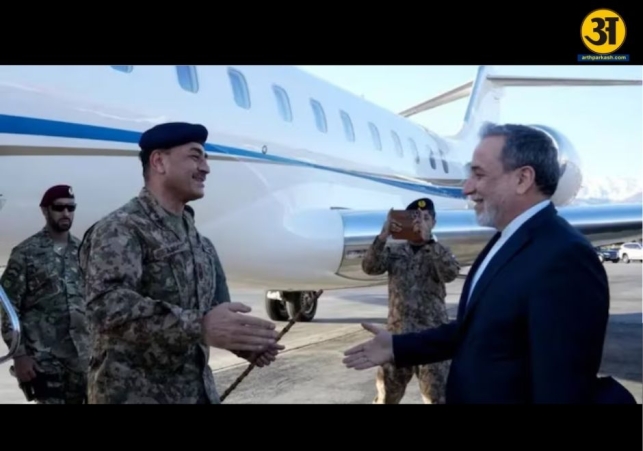
At the same time, Pakistan is trying to raise its diplomatic profile through regional mediation efforts. Reports suggest General Munir is visiting Iran and meeting leaders in Tehran to discuss possibilities for another round of talks after earlier negotiations failed to produce results.
The United States has also signalled that future discussions may take place in Pakistan. If that happens, Islamabad could gain diplomatic importance as a host for sensitive negotiations.
However, some analysts remain cautious about Pakistan’s intentions. They believe the country is also trying to improve its international image at a time when it continues to face criticism over allegations related to extremist safe havens and regional instability.
Pakistan has repeatedly denied supporting militant groups and says it has made major sacrifices in fighting terrorism. Still, concerns from global powers have continued over the years.
By taking part in peace talks and diplomatic outreach, Pakistan may hope to project itself as a responsible regional actor rather than a source of security concerns.
Chaudhry’s remarks, however, have shifted focus back to domestic politics and the question of who truly governs the country.
For many observers, the issue is larger than one statement. It raises familiar questions about democracy, civil-military relations, and how Pakistan is viewed by the outside world.
Whether the government responds formally or ignores the controversy, the comments have once again highlighted Pakistan’s complex political structure.
As the country seeks a bigger diplomatic role abroad, debates over power at home are likely to continue.
Related News